A bilingual eye for AI answers
A service page in Strasbourg can carry a French address, a German intake note, a tram-based access cue, and an EU-adjacent client promise on four different lines. I work where local search, French-German wording, address evidence, and AI summaries overlap, checking whether the business is understood as it actually operates.
If an AI system cannot tell which side of the Rhine you serve, your careful local reputation becomes fog.
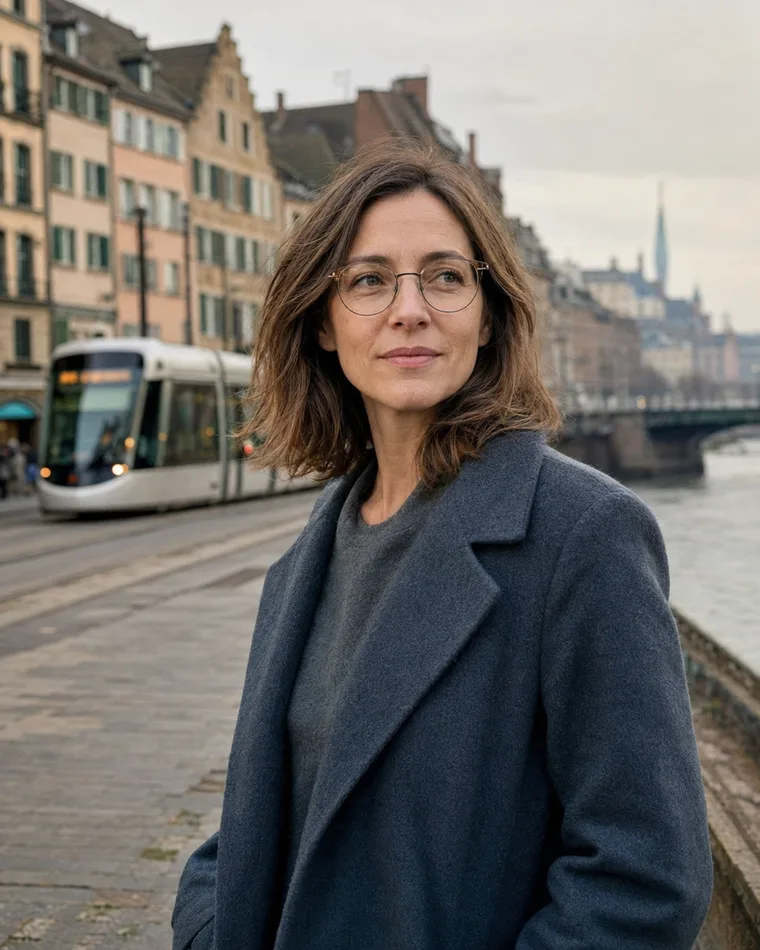
On a damp morning near Étoile Bourse, I wrote a composite note from several small-service audits: a French client called the firm “près du centre,” a German visitor said it was “bei der Tram nach Kehl,” and the owner described it as “Strasbourg Eurométropole, German-speaking by request.” The imperfect detail was ordinary: the German page still used an old service-area phrase while the French page had already been corrected. Put that into a thin service description, and an AI answer engine may keep only one version. That is where my work began to sharpen: in the gap between how Strasbourg people give directions and how machines compress evidence.
I was born toward the Robertsau side of Strasbourg, where EU office rhythms, civic French, Alsatian traces, and German day-trippers sit close without becoming the same thing. In Neudorf, people often describe access by tram and routine errands; near the station, they speak in arrivals, luggage, and appointments; around the Rhine crossing, a five-minute journey can change the assumed language of the customer. The word “bilingual” is also too blunt for the city. It may mean French paperwork with German intake, German-speaking reception, cross-border logistics, or a service that understands Baden-Württemberg expectations. I keep a private Rhine phrasing notebook because those small differences decide whether a firm is represented cleanly in AI answers.
Before focusing on AI visibility, I worked on local search repair, bilingual copy audits, intake notes, and service-page cleanup for independent firms: clinics, translators, legal-support offices, logistics desks, specialist consultants, and other practical businesses that cannot afford to be described loosely. I am strongest at reading the evidence a business already has and finding the missing sentence that would make it legible: service area, jurisdiction, language capacity, address, client type. Strasbourg businesses need wording that survives being summarized.
Path into the niche
- 2009
Local search repair work
I began fixing inconsistent listings, thin service descriptions, and address confusion for small firms that relied on nearby clients finding them correctly.
- 2013–2016
Bilingual copy audit practice
French and German pages became a regular part of my work, especially where the translation looked fluent but the business reality had shifted.
- 2017–2020
Cross-border intake interviews
I collected how customers, reception staff, owners, and German visitors described the same services in different practical search situations.
- 2021
Entity evidence mapping
I started treating names, addresses, service areas, language notes, and client types as connected evidence rather than separate SEO chores.
- 2023
AI answer review focus
My audits turned toward how answer engines compress Strasbourg firms when bilingual and cross-border signals are present but scattered.
Let the city signals work in your favour.
I can review a page, profile, service section, or bilingual pair of pages and show where AI systems may be guessing.
Send a page